How two Orust boatyards became Hallberg-Rassy
From wooden boats and small-scale workshops to production-built offshore cruisers: Hallberg-Rassy grew out of two boatyards that were never partners, but together shaped a bluewater template.
Two paths to the same archipelago
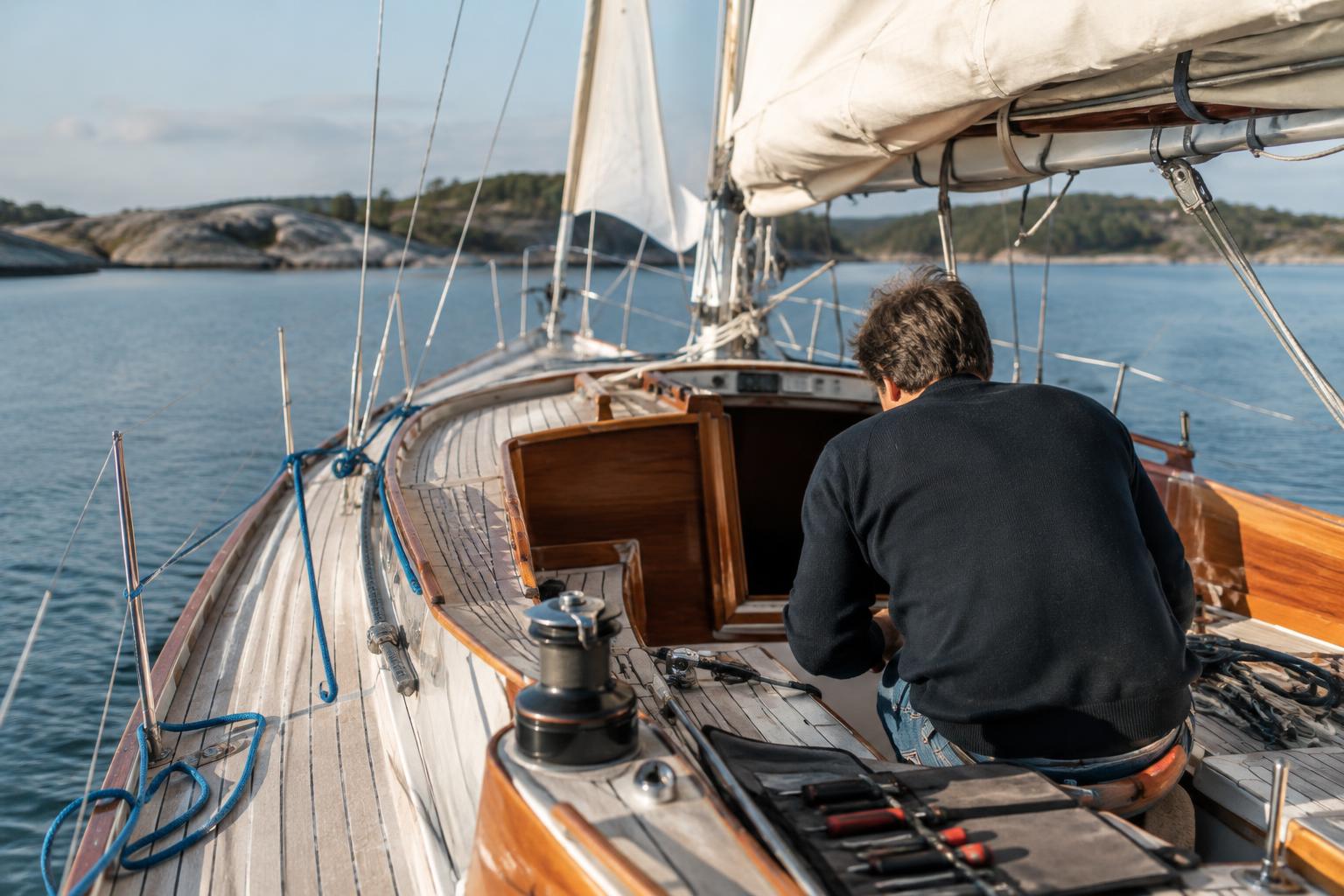
At its heart, Hallberg-Rassy is the story of two separate boatyards that happened to meet in the same archipelago, not of a partnership from the outset. One story begins in Kungsviken on Orust in 1943, where Harry Hallberg started his own yard and built wooden boats on a small scale. The other took shape when Christoph Rassy, who grew up by Starnberger See in Bavaria and apprenticed at a small wooden boatyard in southern Germany, moved to Nötesund in 1960 to build boats in Sweden.
The two men came from different starting points, but were heading in the same direction. Hallberg worked for a long time in a world where drawings barely existed and solutions took shape through conversations with customers. In his spare time, Rassy built boats for himself, sailed them, won regattas and sold them on at a profit. Both started with wood, and both were looking for boatbuilding that worked in practice, not just on paper.
When series production and offshore sailing became an identity
Harry Hallberg was the one who made the early shift that would prove decisive for the yard’s entire identity. In 1963, he became a pioneer in the series production of GRP sailboats and the first successful builder to produce GRP hulls with wooden superstructures in series. First came the Folkboat, followed later by the Kungskryssaren. With the P-28, he also found export success, particularly in the USA.
At the same time, Rassy’s approach was shaped by a different ideal: boats should be larger, finer and suited to longer voyages. Designed by Olle Enderlein in 1966, the Rasmus 35 became the first boat to be series-produced under the Rassy name. The first two were built entirely of mahogany and took a year each to complete. The model stood out straight away. At the time, a 35-footer was considered enormous, and the combination of a sailboat and a windscreen was unusual. But the Rasmus 35 was more than just a new design. It was an early offshore cruiser, with a powerful engine, center cockpit and windscreen — features that would later become part of Hallberg-Rassy’s signature.
In the 1960s, Hallberg built smart, attractive boats in Ellös at a reasonable price, while Rassy gradually established himself with individual boats. Between 1965 and 1972, they were competitors, and that very competition sharpened the brand: one side stood for series production and value for money, the other for offshore ambitions and practical solutions for life aboard.
The merger that created a new name
When Hallberg retired in 1972, everything fell into place. Kungsviken had become too small by the mid-1960s, and Hallberg had built new premises in Ellös, ten kilometres southwest on Orust. At the same time, Rassy needed more space. The result was that the Rassy yard in Kungsviken bought Hallberg’s yard in Ellös.
The new company was named Hallberg-Rassy because Hallberg was the best-known name. But the name also carried an important historical truth: Hallberg and Rassy were never partners. They ran separate businesses, met as competitors and were only brought together when combining the yards and the name became practical and commercially viable.
The models that set the template for the future
After the merger came models that still define the yard. The Monsun 31, created in 1973 and launched in 1974, was a sales success, with 904 built by 1982 — the highest figure for a single Hallberg-Rassy model in the source material. It was the boat that showed in earnest that the new identity worked in series production.
Next came the Hallberg-Rassy 41, a trendsetter that established a new standard for the layout. It was the first with a proper passageway below deck to the aft cabin and had clear passage from bow to stern on one level. The galley was to starboard by the companionway steps, with the navigation station opposite, and the whole idea was built around the notion that a center-cockpit boat could be both safe and easy to live aboard. Pressurised water, hot water, a shower, an electric windlass, a furling genoa, two heads, a powerful engine and a solid wood interior were among the features that made the model something special for its time.
The Hallberg-Rassy 38 carried on the same thinking and was the first model with the characteristic blue stripe around the hull. The Hallberg-Rassy 352 was a sales success, with more than 800 built by 1989, and was the first 35-footer whose designer managed to combine a passageway to the aft cabin with elegant lines. The Hallberg-Rassy 312 then put the emphasis on a faster offshore cruiser: teak decks, an easy-to-handle rig, plenty of space and fine workmanship.
In 1982 came the Hallberg-Rassy 49, a clear flagship for the Swedish boatbuilding industry. And when Germán Frers began working with the yard in 1988, the legacy took on a new form. His first design for the yard was the Hallberg-Rassy 45, launched that same year. It took the series into a new phase, with an externally mounted lead keel in series production, a reinforced hull structure and a Divinycell foam core in the hull. The model also took an overall victory in the ARC across the Atlantic.
That is where Hallberg-Rassy’s history becomes more than a company entry in a catalogue. It shows how Scandinavian offshore sailing developed in practice: from wood and improvisation, through series-built GRP hulls, to boats where safety, volume, durability and ease of handling became the very idea. What began in two small workshops on Orust became a template that other yards would later follow.
More in People & History

Joshua Slocum and Spray: Alone Around the World
When Joshua Slocum left East Boston aboard the rebuilt Spray in 1895, many thought the venture was foolish. Thirty-eight months later, he was the first person to have sailed alone around the world.
The Folkboat: the Nordic idea that became a classic
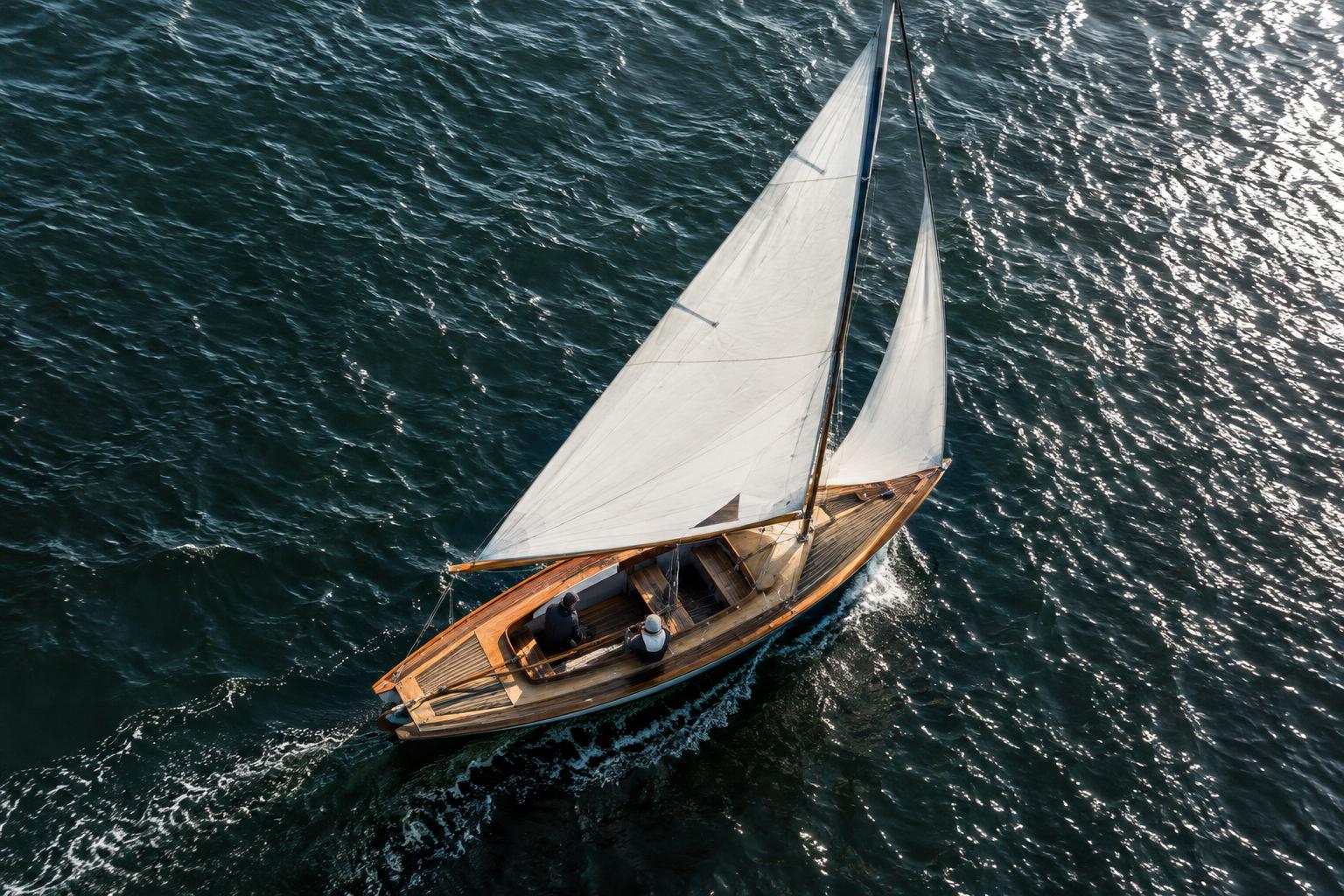
From a shared Nordic one-design idea in the late 1930s to the prototype in Gothenburg, the boats built in plastic and a thriving racing scene. The Folkboat has endured through tradition.
Albin Vega: the fiberglass boat that became Sweden’s people’s boat
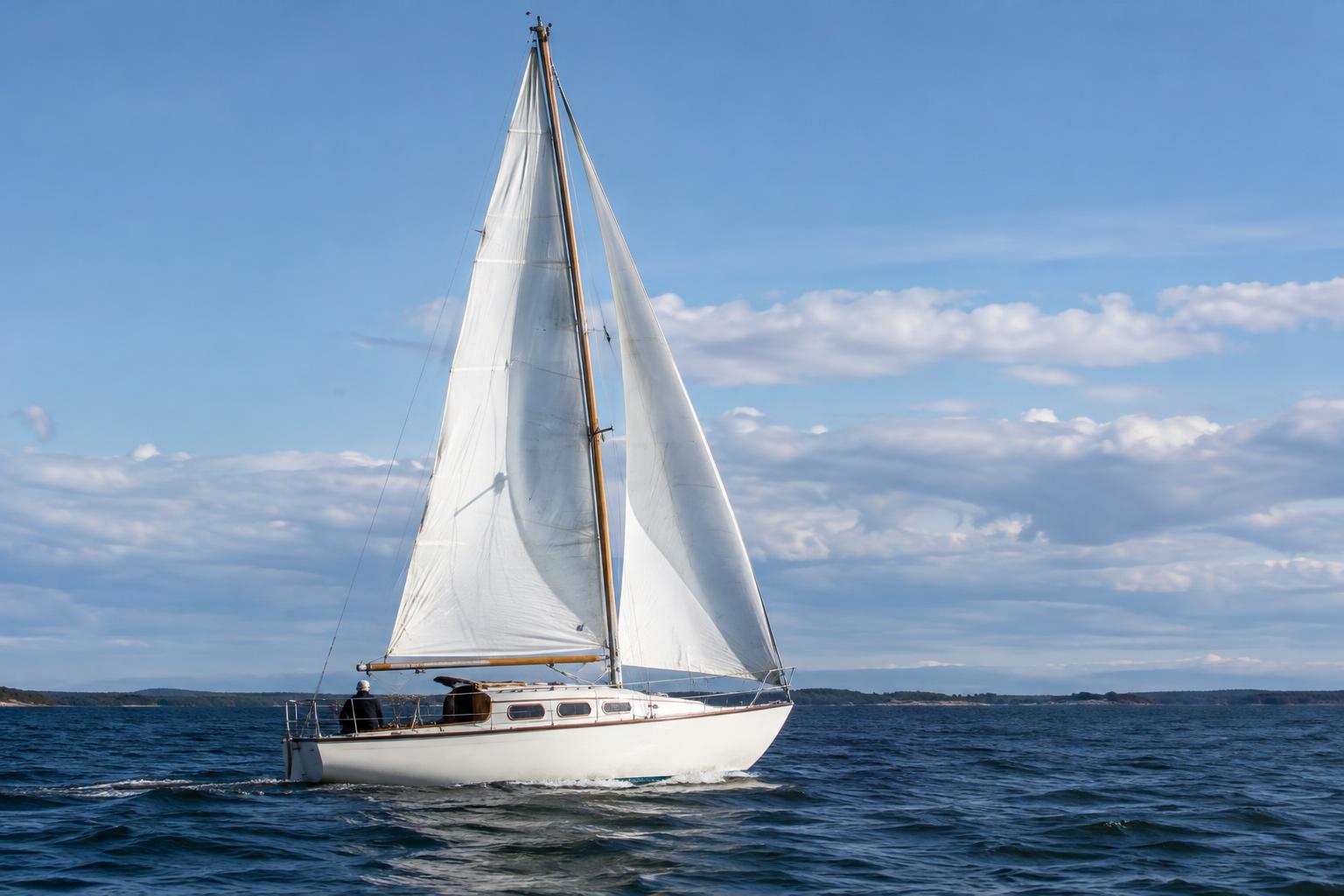
From Per Brohäll’s commission in 1964 to the museum boat TERTIA: Albin Vega became one of the great Swedish family cruisers of the 1960s and remains a popular classic.